Food Court Color Icons for Streamlined Design Workflows
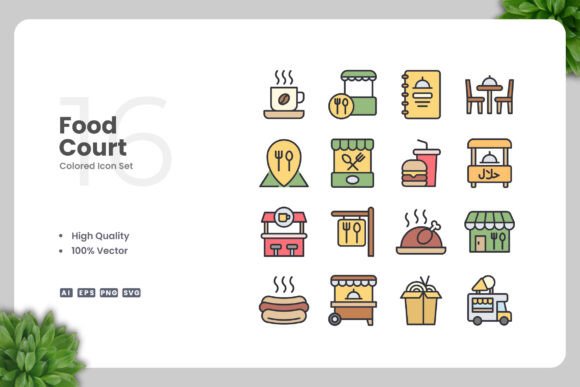
Food Court Color Icons are a versatile set of visual assets designed to enhance the aesthetic and functional aspects of digital and print projects. These icons are ideal for professionals, creators, and entrepreneurs who need high-quality, customizable graphics that fit seamlessly into various design environments. Whether you're working on a website, mobile app, social media campaign, or a printed brochure, these icons offer a consistent and professional look that supports effective communication.
Understanding the Role of Food Court Color Icons in Design Processes
In modern design workflows, icons serve as visual shorthand for complex ideas. Food Court Color Icons provide a clear and intuitive way to represent food-related concepts, making them valuable tools for designers, marketers, and content creators. These icons can be used in multiple stages of a project, from initial planning to final execution, helping to maintain visual coherence across different platforms and formats.
Before starting a project, these icons can help define the visual language of a brand or product. During development, they can be integrated into wireframes, prototypes, and layouts to ensure consistency. After launch, they support ongoing updates and revisions, allowing for easy adjustments without compromising quality.
Key Features and Benefits of Food Court Color Icons
The Food Court Color Icons set includes 100 vector files, ensuring scalability and clarity at any size. This makes them suitable for both digital and print use, eliminating the need for multiple file formats. The high-quality design ensures that each icon remains sharp and legible, even when resized or recolored.
Customization is a major advantage of this icon set. With 100 customizable options, users can adapt the icons to match their specific branding needs. Whether adjusting colors to align with a company’s palette or modifying shapes to suit a particular layout, the flexibility of these icons allows for creative freedom without sacrificing quality.
The inclusion of source files in Adobe Illustrator (AI), EPS Version 10, SVG, and PNG formats ensures compatibility with a wide range of design software. This versatility allows users to work efficiently within their preferred tools, whether they’re using vector-based programs like Adobe Illustrator or raster-based applications like Photoshop.
Integrating Food Court Color Icons into Your Workflow
For designers and developers, integrating Food Court Color Icons into existing workflows requires careful planning and organization. Start by identifying where these icons will be used—whether in a mobile app interface, a website header, or a marketing infographic. Once the context is clear, select the appropriate icons and ensure they align with the overall design system.
When working with teams, it’s important to establish a shared library of icons to maintain consistency. This can be done through cloud-based design tools or internal asset management systems. By centralizing access to Food Court Color Icons, teams can avoid duplication, reduce errors, and streamline the design process.
For individual creators, the ease of drag-and-drop functionality simplifies the integration process. Whether using a design platform like Figma, Adobe XD, or Canva, these icons can be quickly added to projects, saving time and effort. The availability of a Readme.txt file also provides useful guidance on file structure, usage, and customization options.
Practical Use Cases for Food Court Color Icons
One common use case for Food Court Color Icons is in the development of food-related websites and apps. These icons can represent different food categories, menu items, or service options, improving user navigation and engagement. For example, a restaurant booking app might use these icons to indicate available cuisines, dietary options, or special offers.
Marketing campaigns also benefit from the use of Food Court Color Icons. Social media posts, email newsletters, and digital banners can incorporate these icons to create visually appealing content that resonates with audiences. The clean and simple design ensures that the icons remain recognizable and effective across different mediums.
Print materials such as flyers, posters, and brochures can also leverage these icons to enhance visual storytelling. Whether promoting a food festival, a new menu, or a catering service, the icons add a professional touch that complements written information and imagery.
Best Practices for Using Food Court Color Icons
To maximize the effectiveness of Food Court Color Icons, consider the following best practices:
- Consistency: Use the same icon style across all platforms to maintain a cohesive brand identity.
- Accessibility: Ensure that icons are large enough to be easily identifiable and that color contrasts meet accessibility standards.
- Context: Choose icons that accurately reflect the intended meaning and avoid ambiguous or unclear representations.
- Quality Control: Regularly review and update icon usage to ensure alignment with evolving design guidelines and user feedback.
By following these practices, users can ensure that Food Court Color Icons contribute positively to their projects, enhancing both functionality and aesthetics.
Long-Term Value and Maintenance
Investing in a high-quality icon set like Food Court Color Icons offers long-term value. As design trends evolve, the ability to customize and update icons ensures that they remain relevant and effective. This adaptability reduces the need for frequent replacements, saving time and resources over the life of a project.
Maintaining an organized icon library also supports efficient workflow management. By categorizing icons based on function, theme, or usage, users can quickly locate and apply the right assets for each task. This level of organization becomes increasingly important as projects grow in complexity and scale.
For businesses and teams, the long-term use of Food Court Color Icons can also support brand recognition and user experience. A consistent visual language helps build trust and familiarity, making it easier for audiences to navigate and interact with digital and physical assets.